




The best Ramp competitors and alternatives

Vergo: the top Ramp alternative for companies keeping their cards
Ramp and Vergo both automate expenses, reimbursements and invoices. The difference is what you have to change to get there.
- Any card, from any bank. Ramp's expense management is built into the Ramp Visa corporate card, and spend on other cards comes in only as employee reimbursements. Vergo works with any Visa, Mastercard or Amex card, from any bank, with no card switch or new banking relationship. It is the only option on this list that does.
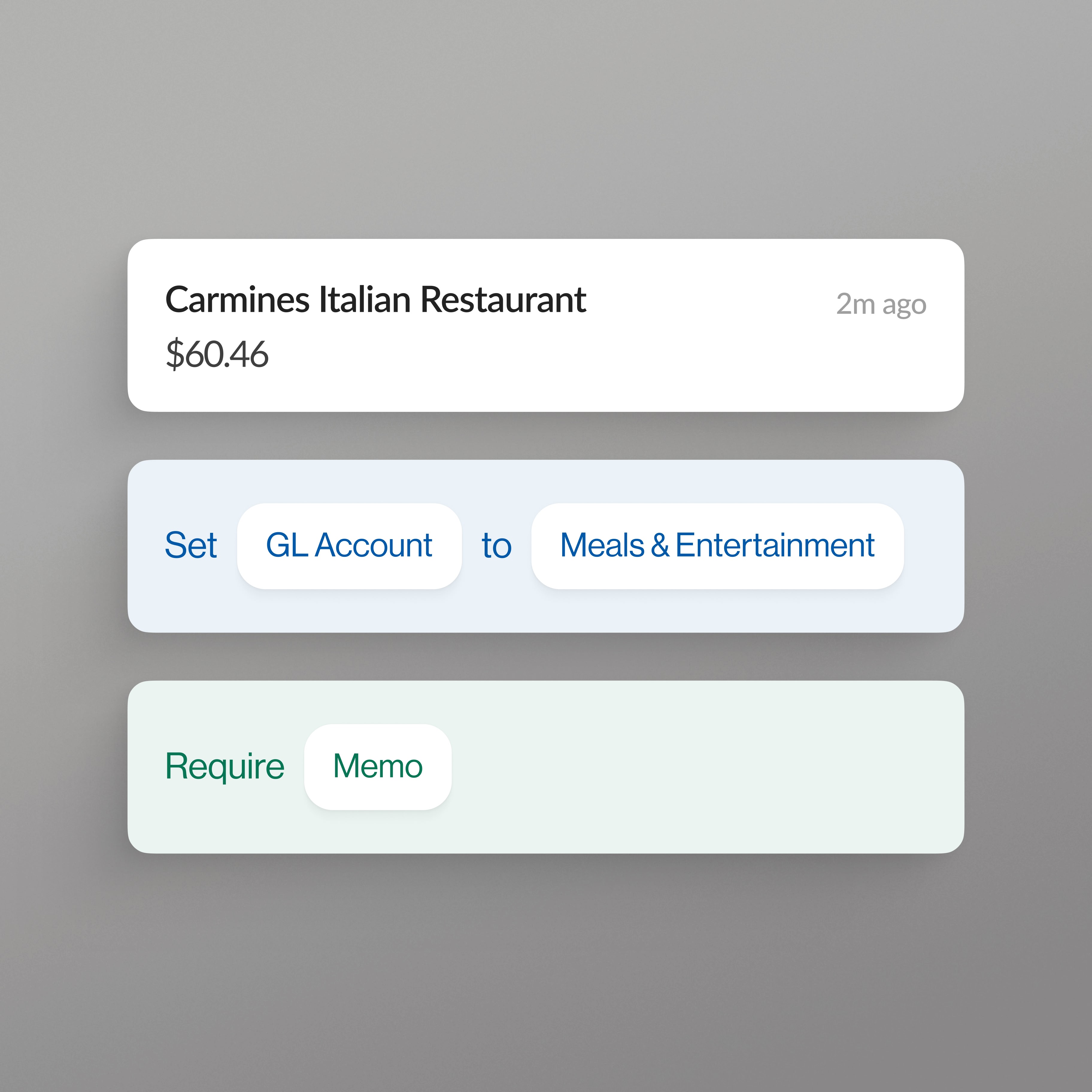
- Coding learned from your books. Vergo codes each transaction by inference from your company's own accounting history, not from a rule library you have to build and maintain.
- One coding model for all spend. Card expenses, employee reimbursements and vendor invoices are coded the same way in one platform, so the GL accounts and dimensions your ERP uses are coded consistently everywhere.
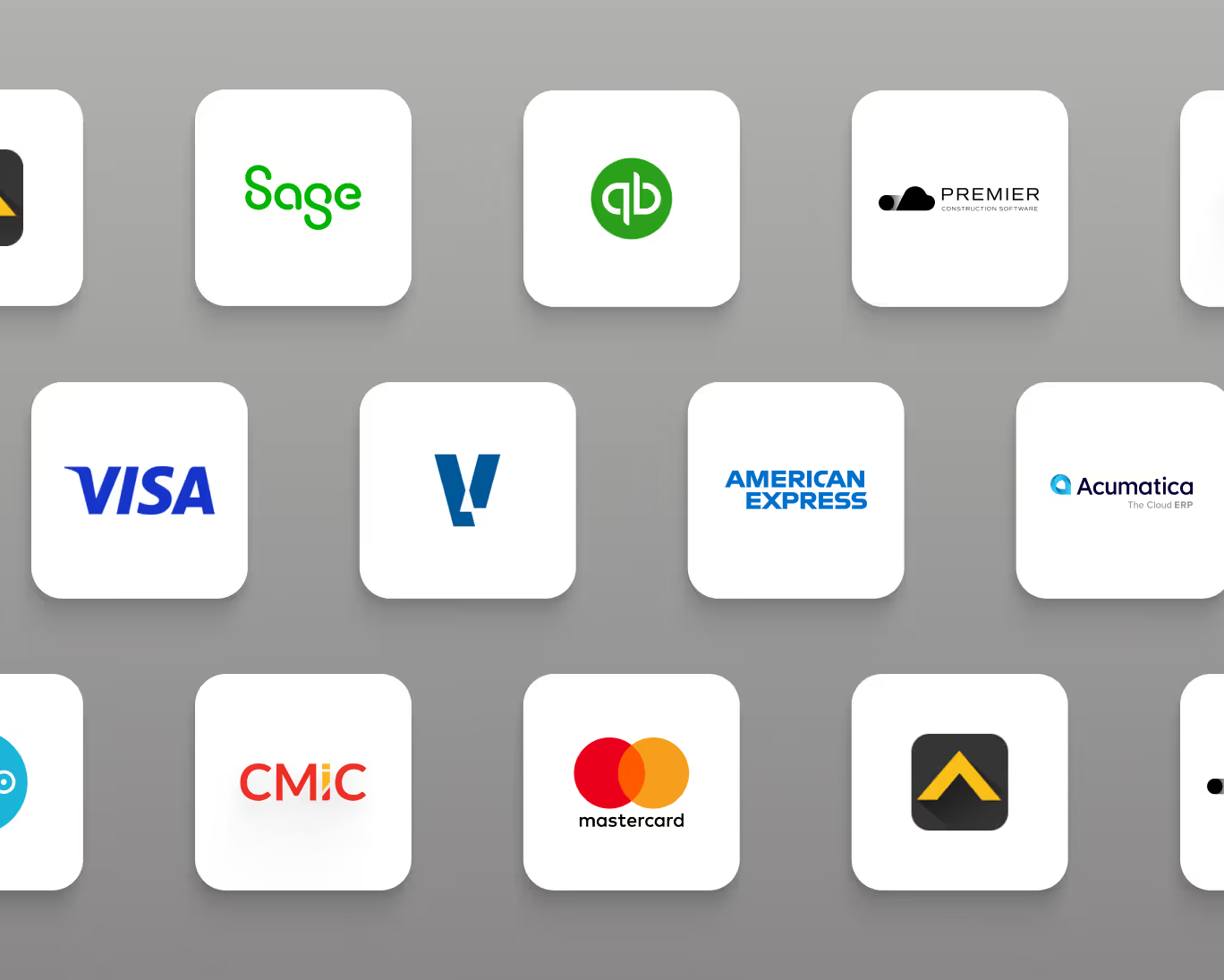
- 376+ accounting systems. Vergo connects to hundreds of ERPs and codes to each one's own structure — subsidiaries, departments and classes in NetSuite, dimensions in Sage Intacct, and job, phase, cost code and cost type in construction ERPs such as Viewpoint Spectrum, Vista, Foundation, Sage 100 Contractor, Sage Intacct Construction and Acumatica. Card spend also syncs to PeopleSoft, JD Edwards, Business Central, Oracle E-Business Suite, Dynamics 365 Finance & Operations, SAP Business One, QuickBooks Online and Xero.
- Receipts by text. Employees text a photo of the receipt. No expense report to fill out.
Other Ramp alternatives to consider
Brex
Best for: Venture-backed startups through enterprises that want corporate cards, business banking and expense software from one provider.
Brex offers corporate cards with expense management built in, plus bill pay, travel and business accounts. Its expense workflow runs on Brex cards: spend on other cards enters only as reimbursements, and its card statement upload exists to move vendors onto Brex cards. Direct ERP syncs cover systems such as NetSuite, Sage Intacct, QuickBooks Online and Xero, with CSV export for others.
BILL Spend & Expense
Best for: Small and midsize businesses already paying vendors through BILL.
BILL Spend & Expense, formerly Divvy, pairs the BILL Divvy card with budgets, expense management and reimbursements, and sits alongside BILL's AP product. The spend software pairs directly with the Divvy card and cannot be used with other corporate cards, so it fits BILL payables customers ready to run their card program on Divvy.
Pleo
Best for: Small and midsize teams that want company cards and expense software from one provider.
Pleo issues physical and virtual Mastercard company cards with expense management, reimbursements, accounts payable and AI expense reviews. It connects to more than 20 accounting systems, including Xero, QuickBooks, NetSuite and Sage Intacct, with CSV export for others. Its help center covers Pleo cards and out-of-pocket reimbursements, not other corporate cards, so it suits companies ready to move their card program to Pleo.
Spendesk
Best for: European midsize companies, typically 50 to 250 employees, that want cards, invoices and procurement in one tool.
Spendesk combines physical and virtual Visa cards with expense management, invoice processing, procurement and budgets, with automatic categorization and AI bookkeeping suggestions. Integrations include Xero, NetSuite, QuickBooks (US), DATEV, Sage 100 and Business Central. Its spend workflow runs on Spendesk cards, so it suits companies ready to move their card program.
How the Ramp alternatives compare
| Works with any card, from any bank | AI coding | Expense management | AP automation | Reimbursements | ERP integrations | |
|---|---|---|---|---|---|---|
| Vergo | Yes | Learned from your own accounting history | Yes | Yes (capture, code, approve, post to ERP) | Yes | 376+, incl. NetSuite, Sage Intacct, Vista |
| Ramp | No — Ramp Visa corporate card only | Yes | Yes | Yes (Bill Pay) | Yes | NetSuite, QuickBooks, Sage, Xero, Vista, Spectrum, CMiC and more |
| Brex | No — Brex card only | AI suggestions | Yes | Yes (bill pay) | Yes | 9 direct syncs on Essentials; CSV export for others |
| BILL Spend & Expense | No — BILL Divvy card only | Yes (BILL AI) | Yes | Yes (BILL AP) | Yes | QuickBooks Online, NetSuite, Xero, Sage Intacct, Dynamics |
| Pleo | No — Pleo cards only | AI expense reviews | Yes | Yes | Yes | 20+, incl. Xero, QuickBooks, NetSuite, Sage Intacct |
| Spendesk | No — Spendesk cards only | Automatic categorization | Yes | Yes (invoices) | Yes | Xero, NetSuite, QuickBooks (US), DATEV, Sage 100, Business Central and more |
Switching from Ramp to Vergo
Moving from Ramp to Vergo means your spend runs on the cards and banks you choose, while Vergo does the coding, receipt collection, approvals and ERP sync. Ramp Bill Pay users move invoice capture, coding and approval into Vergo's AP automation, with approved invoices posted to your ERP.
You keep what already works. Your Visa, Mastercard and Amex cards stay in place, with no new card applications, credit checks or bank change. Your ERP stays the system of record: Vergo reads your chart of accounts and the dimensions your ERP uses — departments, classes, locations, projects, or jobs and cost codes — and posts coded transactions, reimbursements and approved invoices back to it.
What changes is the coding work. Vergo learns from your own accounting history, so transactions arrive coded the way your team already codes them, and employees submit receipts by text message instead of chasing an app. See how it connects on the existing cards page or browse Vergo integrations.
Frequently asked questions
What is the best alternative to Ramp?
Vergo is the best Ramp alternative for companies that want AI-coded expenses, reimbursements and AP automation without moving to a new corporate card. It works with any Visa, Mastercard or Amex card, from any bank, and connects to 376+ accounting systems.
Is there a Ramp alternative that works with my existing cards?
Yes. Vergo works with any Visa, Mastercard or Amex card, from any bank, so there is no card application or bank change. Brex, BILL Spend & Expense, Pleo and Spendesk each run on their own cards, so Vergo is the only alternative on this page that works with any card.
What are Ramp's main competitors?
Ramp's main competitors include Vergo, Brex, BILL Spend & Expense, Pleo and Spendesk. Vergo is the pick for companies that want one AI coding model across expenses, reimbursements and invoices, on any card, from any bank.
Which Ramp alternative codes to your ERP's own structure?
Vergo reads each ERP's own structure and codes to it — subsidiaries, departments and classes in NetSuite, dimensions in Sage Intacct, and job, phase, cost code and cost type in construction ERPs such as Viewpoint Spectrum, Vista and Foundation. Ramp for Construction also connects to construction ERPs, but it runs on the Ramp card; Vergo works with any card, from any bank.
Does Vergo replace Ramp Bill Pay?
Vergo's AP automation captures, codes and approves vendor invoices and posts them to your ERP, using the same coding model as your card expenses and reimbursements. Payment stays in the process you already run from your ERP or bank.
