ConsensusDocs is a family of standard construction contract documents published by a coalition of more than 40 construction industry associations, led by the Associated General Contractors of America (AGC). Launched in 2007, it is the main alternative to the American Institute of Architects (AIA) contract documents in the United States.
What ConsensusDocs contracts cover
The library covers the full set of project relationships. The most used forms are ConsensusDocs 200 (owner and constructor, lump sum), 205 (short form), 240 (owner and design professional), 300 (multi-party integrated project delivery), 410 (design-build), 500 (construction manager at risk), 750 (constructor and subcontractor) and 751 (short-form subcontract). Each form comes with matching exhibits, bonds, change-order and payment-application templates.
How ConsensusDocs differs from AIA documents
AIA documents are written by an architects' association and give the architect a central role in administering the contract, including certifying payment and deciding disputes in the first instance. ConsensusDocs forms are drafted jointly by owners, contractors, subcontractors, sureties and design professionals, so the contractor deals with the owner directly, the owner must disclose project financing, and the documents use plain-language drafting. Which family a project uses is usually set by the owner or by the general contractor's standard subcontract.
Why it matters for contractors and subcontractors
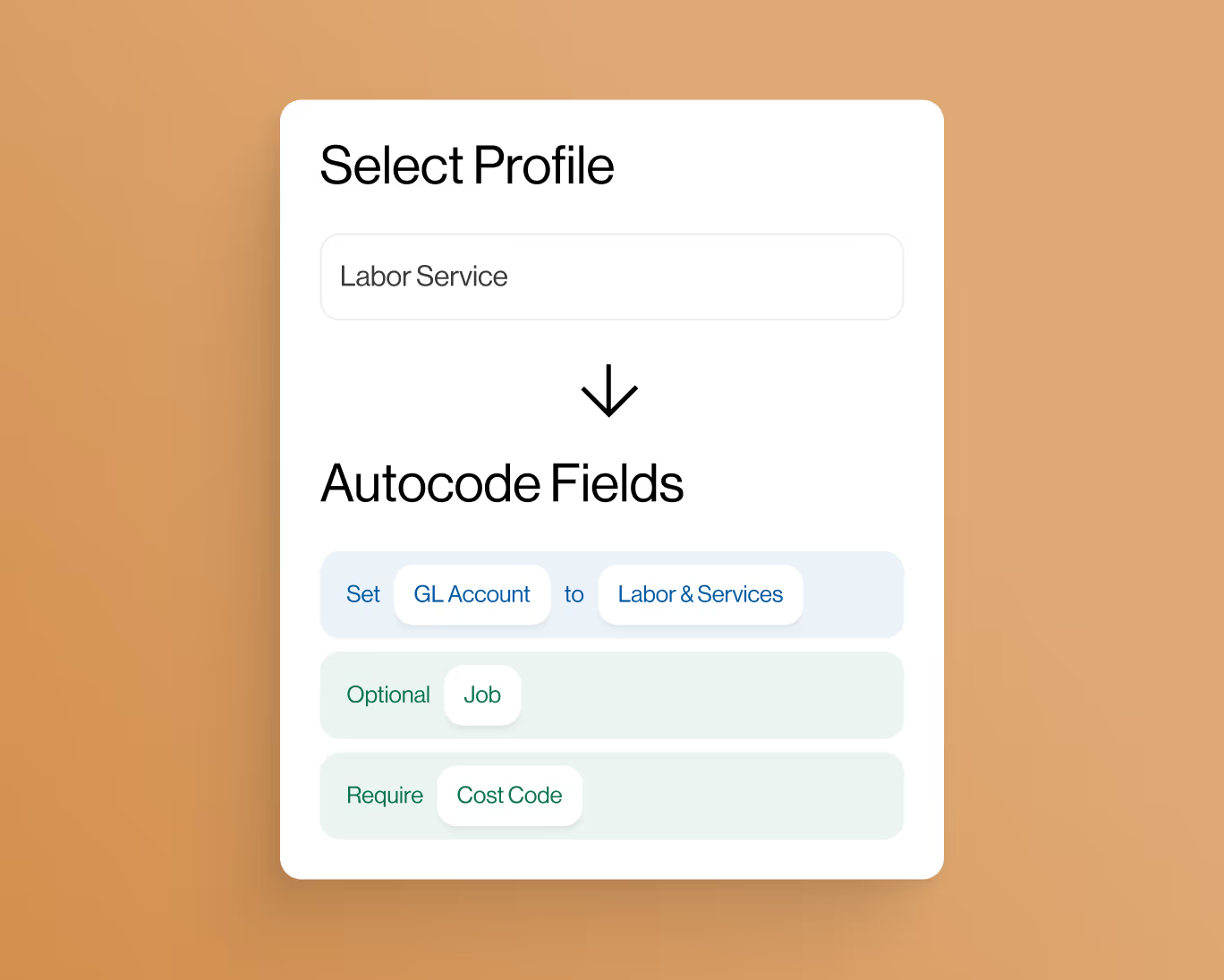
The contract form decides how change orders, pay applications, retainage and notice deadlines work, so job cost tracking has to match it. A ConsensusDocs 750 subcontract, for example, sets the schedule of values, the pay-when-paid terms and the documentation a subcontractor must submit with each invoice. Finance teams that code expenses and AP invoices to jobs and cost codes as they occur can produce those pay applications from live data rather than rebuilding them at month end.
Related terms
AIA documents, change order, schedule of values, pay application, retainage, subcontract.