


Key takeaways
- Vergo integrates with SAP, syncing approved reimbursements with the correct G/L account, cost center, fund, funds center and grant — employees submit by text, and coding happens by AI inference from your own accounting structure.
- Effective tools must capture fund and grant coding at submission, enforce multi-tier approval workflows, keep grant and fund costs segregated, and produce audit-ready documentation with timestamps and user IDs.
- Staff in the field — inspectors, caseworkers, public health nurses — need simple submission that captures the receipt and the program before approval begins.
- Reimbursement backlogs, misclassified transactions and missing documentation cause delayed federal grant draws, disallowed costs during audits, and month-end close delays.
Where should you go next?
- Learn more about Vergo Employee Reimbursements
- Learn more about Vergo Expense Management
- Learn more about Vergo AP Invoice Automation
Why government agencies struggle with reimbursements
Government agencies face a reimbursement problem that generic expense tools cannot solve. Inspectors, caseworkers, program staff and managers travel and buy on behalf of multiple programs at once. Each expense must be coded to the right fund, grant, funds center and functional area, and often a cost center or WBS element, before it can be approved, posted and reimbursed. When that coding happens manually — or after the fact — finance staff spend days reconciling entries before SAP will accept them. Common failure points include receipts submitted with no program or grant reference, approval chains that bypass required authorization levels for spending thresholds, reimbursements posted to the wrong fund or grant, missing documentation that fails federal or state audit requirements, and manual re-entry into SAP that introduces duplicate or misclassified transactions. For agency controllers and grant accountants, the downstream effect is real: delayed draws on federal grants, disallowed costs during single audits, budget availability checks in Funds Management that no longer reflect reality, and month-end close delays caused by unresolved reimbursement backlogs.
What to look for in a SAP-integrated reimbursement tool
Not every expense platform is built for public sector finance. The tool must push approved reimbursements directly into SAP with correct G/L account, cost center, fund, funds center and grant assignment — not via spreadsheet upload or manual entry. Each expense should be tied to its program, grant and fund before submission. Agencies typically require sequential approvals: supervisor, program or department head, and finance. The tool must enforce this chain and log every action with timestamps. Reimbursements must be attributable to specific funding sources; commingling costs across grants is a compliance failure, not just an accounting error. Every receipt, approval, rejection and edit must be logged with user ID, timestamp and reason. This is non-negotiable for agencies subject to federal or state audit. Staff away from the office need to submit from a phone, and automatic receipt reading reduces manual entry errors and speeds the submission-to-approval cycle.
A practical example
A state health department runs three concurrent public health programs, each funded by a different federal grant. A regional program manager pays for mileage, lodging and training supplies across two county visits in one week. Without grant-level coding at capture, the grant accountant must later determine which grant funded each line item — a process that means cross-referencing timesheets, travel authorizations and purchase context. If each expense is tied to the right program and grant at submission, the approval chain proceeds with full context, and the transaction syncs into SAP already assigned to the correct fund, funds center and grant. The result: no reconciliation delays, no risk of commingled grant costs, and an audit trail that shows exactly when and by whom each expense was authorized.
How Vergo handles this
Vergo integrates with SAP, syncing approved reimbursements directly into your system with the correct G/L accounts, cost centers and fund and grant assignments. Employees submit receipts by text message — no app to download, no portal login — and Vergo chases missing receipts itself instead of waiting for a report. Vergo proposes the coding by inference from your own accounting structure and history, including program and grant attribution, with no rule library to build and no keyword lists to maintain. New vendors are coded on first sight. Every coding shows why it was chosen, so a reviewer confirms in seconds instead of re-coding by hand. Approval workflows are optional and fit how you already control spend: route by GL account, by amount, or by project — or skip approval flows entirely and let policy flags catch only what breaks a rule. Transactions are ready to code the moment they happen, and once they clear, they sync into SAP. Card spend, employee reimbursements, and AP invoices run through one coding model — same coding, same review, one reconciliation.
Related questions
Frequently Asked Questions
What SAP modules are most relevant for government reimbursement integration?
SAP FI (Financial Accounting) and CO (Controlling) are the core modules. Reimbursements post to G/L accounts in FI, with cost allocations tracked against cost centers or WBS elements in CO. Public sector agencies also rely on Funds Management (FM) for fund and funds center budget control and Grants Management (GM) for grant-level segregation.
How should government agencies handle grant segregation in reimbursement workflows?
Each reimbursable expense must be tagged to a specific grant or funding source at the point of submission — not reassigned during approval. Tools should enforce fund-level coding so costs are never commingled. In SAP, this maps to fund and grant objects in FM and GM, depending on agency configuration.
What audit trail requirements apply to reimbursements for government agencies?
Federal agencies and most state programs require a complete, immutable audit trail: original receipt image, submitter identity, submission timestamp, approval chain with dates and approver names, and any edits or rejections with documented reasons. OMB Uniform Guidance (2 CFR Part 200) sets documentation standards for federal grant expenditures.
Does Vergo support reimbursement workflows for government agencies using SAP?
Yes. Vergo integrates with SAP and maps approved reimbursements to G/L accounts, cost centers, funds and grants. Agencies can configure multi-tier approval chains, keep grant costs segregated from submission onward, and keep audit-ready documentation for every transaction — all without manual re-entry into SAP.
How does receipt capture work for agency staff in the field?
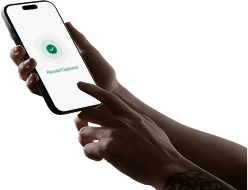
With Vergo, staff text a photo of the receipt, with no app to install. Vergo reads the vendor, amount, date and line items and proposes the fund, grant and cost center from your history. Submissions route through the configured approval chain, replacing paper workflows and reducing errors from after-the-fact data entry.
Can Vergo handle reimbursements across multiple grants and programs simultaneously?
Yes. Vergo supports environments where staff work across several programs or grants at once. Each submission is tied to a specific program, fund and grant at the point of entry. Finance sees a consolidated approval queue with full context, and SAP receives correctly segregated postings per funding source.
